I used to routinely avoid group dinners in graduate school. Not because I didn’t want to be there, but because I already knew I had not brought enough money to comfortably cover my part of a shared tab. When everyone else ordered freely, I was doing math in my head. Eventually, it was easier to opt out than to explain.
That experience stays with me because it captures something many people never see: how financial precarity quietly shapes participation, belonging, and opportunity long before anyone talks about merit.
Graduate school is often framed as “low pay, but temporary.” That framing only works if you have a financial cushion. If you know you can call home. If you have savings. If someone can help if things go wrong. When you don’t have that safety net, every month becomes an exercise in risk management. You are not just training. You are surviving. And you learn quickly which parts of your life are safer to keep quiet.
This same dynamic shows up well before graduate school, especially in unpaid internships and volunteer “experience.” These opportunities are often treated as neutral rites of passage, something everyone must endure to get in the door. But neutrality assumes everyone starts from the same place. If you are first-generation, low-income, or from an underserved background, working for free is not a temporary inconvenience. It is a structural barrier. [1]
“Just do the internship” can mean relocating to a city you cannot afford, paying for housing without income, and losing wages you rely on to survive. It can also mean working in environments where you have limited leverage. When you are unpaid, you have less power to set boundaries, less room to push back, and less protection if something goes wrong. You may be learning, but you are also exposed. [2]
Over time, these pressures compound. They can feed imposter syndrome, not because you lack ability, but because you are navigating systems that were not designed with you in mind. When you cannot afford to attend dinners, conferences, or informal networking spaces, you miss more than social time. You miss access to the unwritten rules that help people feel confident and included. You can earn your seat and still feel like you are borrowing it.
More recently, these economic tensions are becoming harder to ignore. Graduate programs and postdoctoral pathways are feeling a real crunch. Students are less willing to be woefully underpaid, and postdocs are questioning whether they can afford to sacrifice years of income only to remain financially behind their peers who entered the workforce earlier. NIH’s NRSA stipend levels have increased, and the FY 2025 Year 0 postdoctoral stipend is $62,232 [3]. It is better than what it was, but it is still often lower than comparable roles in industry or many nonprofit settings. I think when I started back in 2012, the stipend was $40,000. Many people outside academia are surprised to learn that graduate and postdoctoral years often do not translate cleanly into “professional experience” in many hiring systems. In practical terms, that means years of lost earning power, delayed financial stability, and then being treated as entry-level when you finally transition. [4-5]
This is not just about paychecks. It is about opportunity cost. Lost years of compounding income. Lost retirement contributions. Fewer options when life happens. These costs are invisible to those who never had to account for them, but they shape who can stay, who advances, and who quietly exits. [6]
Now, we are watching another shift unfold. Artificial intelligence is automating many routine tasks that once served as entry points for early-career workers. Those tasks were not glamorous, but they mattered. They were how people learned workflows, built confidence, and proved themselves capable. If those on-ramps disappear without being replaced, the gap widens further. Without intentional design, the future of work risks becoming even less accessible to those without built-in advantages. [7-9]
I do not share this for sympathy. It is simply a fact of what happened. At the end of my PhD, I was homeless and couch-surfed across friends’ places for about five to six months because I could no longer afford my apartment, and I still had to finish dissertation revisions. My friends were my lifeline. That reality shaped how I see training, work, and what we ask people to endure in the name of “experience.”
If we care about equity in STEMM, medicine, law, research, and beyond, then paid internships, funded training pathways, transparent wage structures, skills-based hiring, and intentional entry points are not perks. They are how systems filter out talent before it ever has a chance to be seen.
So I’ll end with a question I keep coming back to:
What have you had to sacrifice to fit in?
About the Author
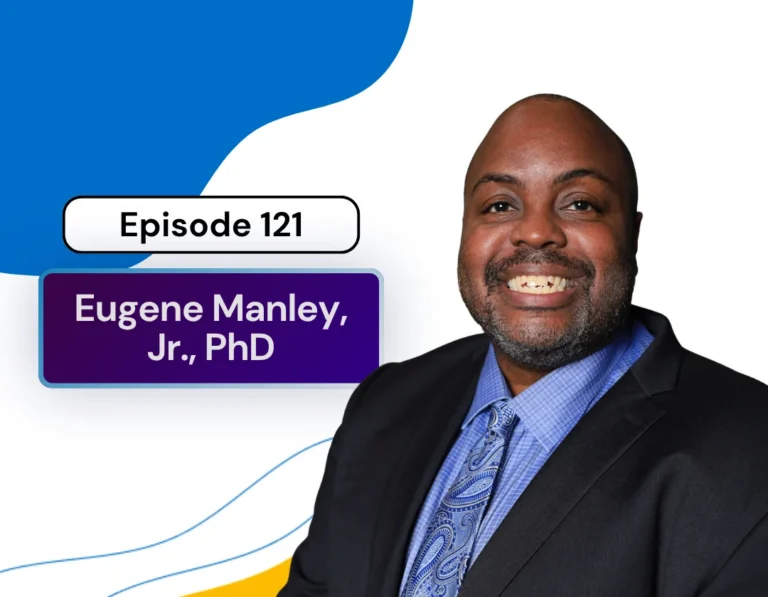
Dr. Eugene Manley, Jr. is the Founder and CEO of the SCHEQ (STEMM & Cancer Health Equity) Foundation. SCHEQ works to increase STEMM workforce diversity by helping diverse scholars recognize, pursue, and navigate STEMM career pathways, while also improving access to information and resources for underserved populations navigating medical care and cancer care. Dr. Manley brings lived experience, scientific training, and systems-level insight to his work at the intersection of education, workforce development, and health equity.
If you’d like to support SCHEQ’s mission to expand equitable training pathways and improve health outcomes for underserved communities, you can learn more or contribute here: [Donate to SCHEQ]
References and Further Reading
- National Association of Colleges and Employers. (n.d.). Unpaid internships and the need for federal action (Position statement: U.S. internships).
- U.S. Department of Labor, Wage and Hour Division. (n.d.). Fact Sheet #71: Internship programs under the Fair Labor Standards Act. Updated January 2018.
- National Institutes of Health. (2025, May 16). Ruth L. Kirschstein National Research Service Award (NRSA) stipends, tuition/fees and other budgetary levels effective for fiscal year 2025 (NOT-OD-25-105).
- National Academy of Medicine. (2024). The state of the U.S. biomedical and health research enterprise: Strategies for achieving a healthier America. M. H. Laitner, A. M. Huang, and S. Takala-Harrison, editors. NAM Special Publication. Washington, DC: The National Academies Press. https://doi.org/10.17226/27588
- Sainburg, T. (2023). American postdoctoral salaries do not account for growing disparities in cost of living. Research Policy, 52(3), 104714.
- Brynjolfsson, E., Chandar, B., & Chen, R. (2025, August 26). Canaries in the coal mine? Six facts about the recent employment effects of artificial intelligence (Working paper). Stanford Digital Economy Lab.
- World Economic Forum. (2025). The Future of Jobs Report 2025.
- Organisation for Economic Co-operation and Development. (2024). Artificial intelligence and the changing demand for skills in the labour market (OECD Artificial Intelligence Papers). OECD Publishing.
- Edmondson, A. C., & Chamorro-Premuzic, T. (2025, September 16). The perils of using AI to replace entry-level jobs. Harvard Business Review.