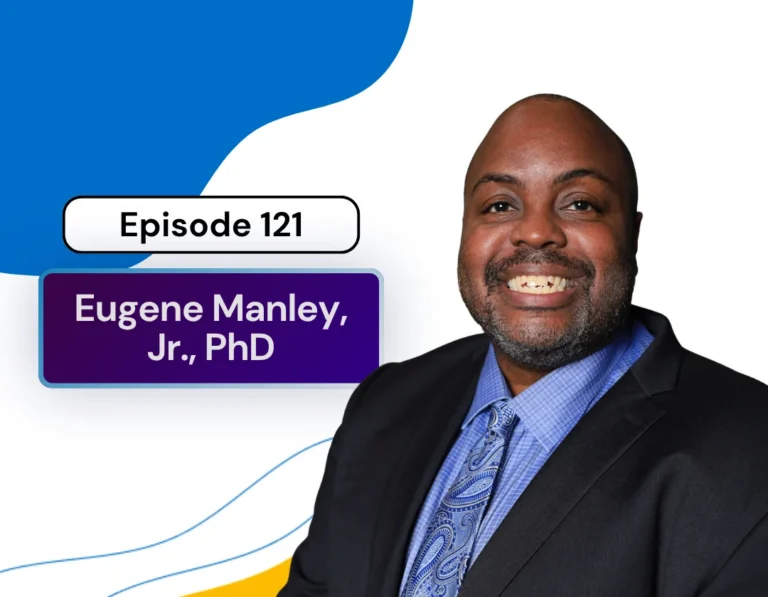
The STEMM & Cancer Health Equity (SCHEQ) Foundation was recently featured on the Empowered Patient Podcast, hosted by Karen Jagoda, in an episode focused on addressing health disparities through workforce diversity and improved access to clinical trials.
In this conversation, SCHEQ Founder & CEO Dr. Eugene Manley, Jr. discussed how inequities in cancer care often originate upstream, long before a patient is diagnosed or offered treatment. Drawing from his background in biomedical science and health equity advocacy, Dr. Manley emphasized that workforce diversity, community engagement, and intentional system design are essential to improving outcomes for underserved populations.
Workforce Diversity as an Upstream Equity Strategy
The episode highlighted how limited diversity in the STEMM workforce shapes downstream patient outcomes. When researchers, trial designers, coordinators, and decision-makers do not reflect the populations most affected by disease, gaps emerge in research priorities, trial enrollment, and patient trust. SCHEQ’s work focuses on increasing STEMM access, mentorship, and training so that future leaders are better equipped to serve diverse communities across the cancer care continuum.
Clinical Trials, Lung Cancer, and Representation
Using lung cancer as a case example, Dr. Manley discussed persistent disparities in biomarker testing and clinical trial participation among Black, Hispanic, rural, and underserved patients. He noted that clinical trials are still disproportionately conducted at large academic medical centers, while many patients facing the greatest burden of disease receive care in community-based settings with fewer resources. Decentralized and community-engaged trial models were identified as critical pathways for improving access and retention.
AI, Data, and Equity
The conversation also explored the growing role of artificial intelligence in healthcare. While AI has the potential to improve early detection, risk prediction, and trial matching, Dr. Manley cautioned that AI systems trained on non-diverse datasets risk reinforcing existing inequities. Without intentional inclusion and measurable equity goals, technological innovation can inadvertently widen disparities rather than close them.
SCHEQ’s Commitment
SCHEQ Foundation works at the intersection of education, workforce development, patient navigation, and community engagement to ensure that advances in cancer research and care benefit everyone. As discussed on the podcast, health equity is not accidental. It requires intentional strategies, sustained investment, and accountability.
🎧 Listen to the full episode:
http://empoweredpatientradio.com/addressing-health-disparities-through-workforce-diversity-and-improved-access-to-clinical-trials-with-dr-eugene-manley-stemm-cancer-health-equity-foundation