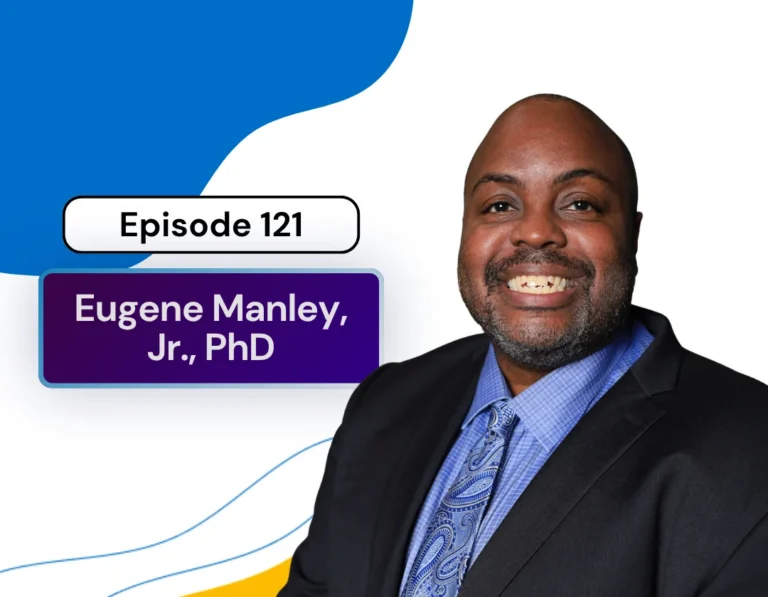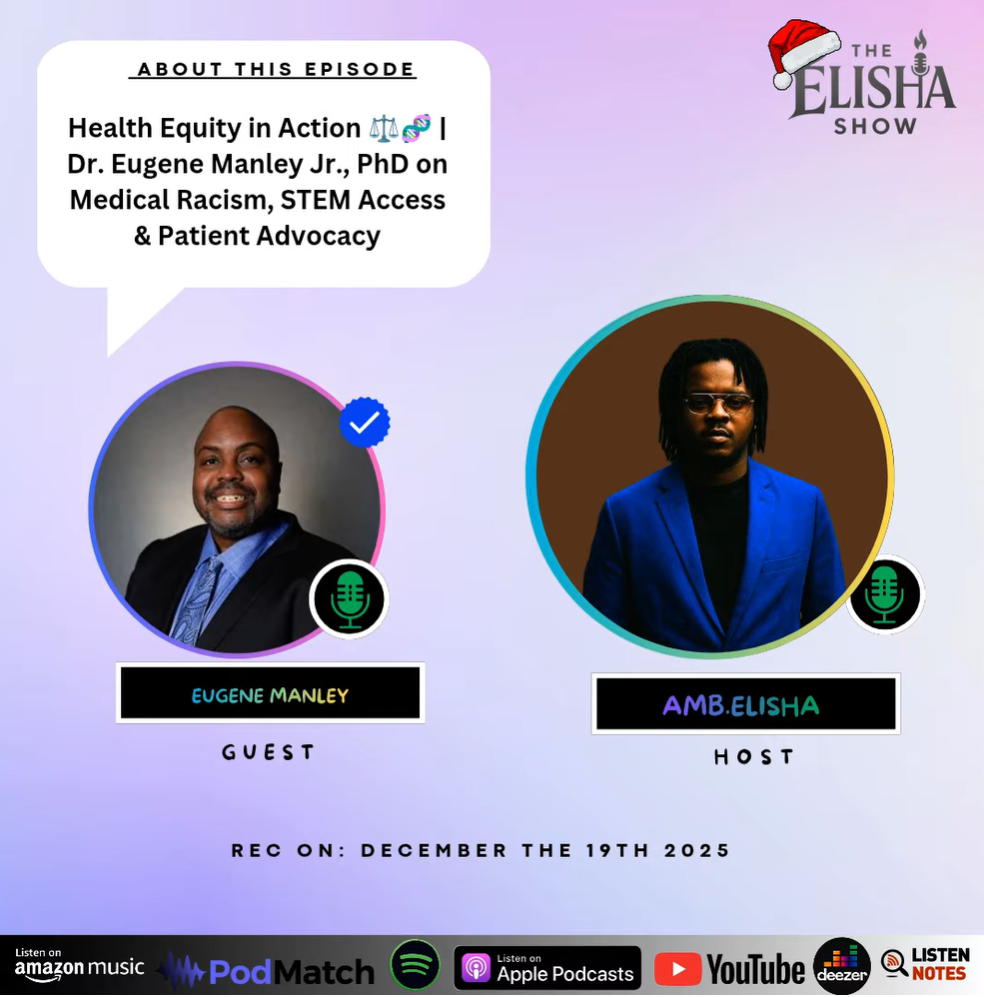
STEMM & Cancer Health Equity (SCHEQ) Foundation Founder & CEO, Dr. Eugene Manley Jr., PhD, recently joined Amb. Elisha on The Elisha Show for a powerful conversation on The Elisha Show podcast examining what really happens inside the healthcare system when patient voices are dismissed, including those of clinicians, scientists, and experts themselves. He discussed medical racism, STEM access, and patient advocacy,
In this candid and wide-ranging discussion, he draws from lived experience, scientific training, and national advocacy work to highlight why health equity must be treated as a core patient safety issue – not an afterthought.
From Lived Experience to Systems Change
Dr. Manley reflects on growing up with chronic illness, navigating STEMM as a neurodivergent scholar, and experiencing medical bias firsthand following surgery. These experiences ultimately led to the founding of the SCHEQ, a national nonprofit focused on improving cancer outcomes and diversifying the STEMM workforce.
A central message of the conversation: expertise does not protect patients from bias, and systems must be designed to listen, not dismiss.
Disparities Hidden in Plain Sight
The episode explores how medical racism and structural inequities show up in everyday clinical care, including:
- Dismissal of patient-reported symptoms and pain
- Delayed diagnoses and preventable complications
- Well-known examples such as Serena Williams’ pulmonary embolism and Venus Williams’ fibroid diagnosis
- Persistent disparities affecting Black women and other historically underserved communities
These are not isolated incidents, but patterns that reflect deeper systemic failures.
Lung Cancer, Equity, and the Power of Convening
The conversation also highlights SCHEQ’s Lung Cancer Health Equity/Interventions Summit, a flagship convening designed to move beyond awareness and toward solutions. Dr. Manley discusses how the Summit brings together researchers, clinicians, advocates, industry leaders, and community members to:
- Address lung cancer disparities with data-driven strategies
- Elevate patient and caregiver voices
- Build cross-sector partnerships focused on measurable outcomes
The Summit reflects SCHEQ’s belief that equity work must be collaborative, accountable, and action-oriented.
Building the Next Generation of Diverse STEMM Leaders
Another key focus of the discussion was how to create real pathways for diverse scholars into STEMM fields – not just access, but sustained success. Dr. Manley emphasizes:
- Early exposure and mentorship
- Representation and visibility in science and healthcare careers
- Training programs that acknowledge lived experience alongside academic rigor
- The importance of supporting students and professionals without normalizing burnout
At SCHEQ, workforce diversity is not separate from patient outcomes – it is essential to them.
A Call for Humanity, Accountability, and Action
This episode is essential listening for patients, caregivers, students, educators, healthcare professionals, and leaders committed to building systems that listen, learn, and change.
Health equity is not optional. When patients aren’t heard, harm follows – and when communities are included, outcomes improve. This episode was scheduled through podmatch.
You can listen to the full episode here: