Every system now wants you to download an app.
✅ Your doctor’s office.
✅ Your hospital.
✅ Your pharmacy.
✅ Your insurance company.
✅ Your lab.
✅ Your phone provider.
✅ Your airline.
Each one promises convenience.
But the reality often looks like this:
🎯Multiple logins.
🎯 Multiple passwords. (8, 10, 12 or 14 characters, use ! in one, can’t use it in another, must have numbers, must have caps, must have lowercase)
🎯 Multiple rounds of two-factor authentication.
🎯 Multiple portals that don’t talk to each other.
🎯 This is app fatigue.
And in healthcare, it can quietly become a barrier to care.
Many patients now navigate multiple health systems simultaneously:
➡️ A primary care provider in one network.
➡️ A specialist in another.
➡️ A hospital in a third.
➡️ A pharmacy tied to yet another system.
Each system requires its own portal.
Each portal asks you to complete the same forms again.
Each portal has its own authentication process.
And none of them truly share data in a way that reduces the burden on the patient.
59% of people had multiple online medical records or patient portals in 2024, yet only 7% used a portal-organizing app to combine information from different systems into one place. (ASTP 2024)
This is where the conversation moves beyond convenience and into interopability and health equity. (ASTP 2024)
Digital tools are supposed to reduce friction.
But when systems are not integrated, they simply shift administrative work onto patients.
That burden falls hardest on:
– Patients managing multiple conditions
– Older adults navigating digital tools
– People without reliable internet access
– Caregivers coordinating care across providers
The issue is not technology.
The issue is fragmentation.
Healthcare systems often optimize their own internal workflows without fully considering the cumulative burden placed on patients who move between them.
A few changes could make a meaningful difference:
💡 Interoperable patient portals that allow information sharing across systems
💡 Single sign-on authentication for verified healthcare networks
💡 Reduced reliance on mandatory apps when web access is sufficient
💡 Simplified intake processes that reuse existing patient data instead of repeatedly requesting it
Technology should simplify care.
It should not become another barrier to navigating it.
Health literacy is not just about understanding medical information.
It is also about designing systems that people can realistically navigate.
When the system becomes too complex to access, access itself becomes the problem.
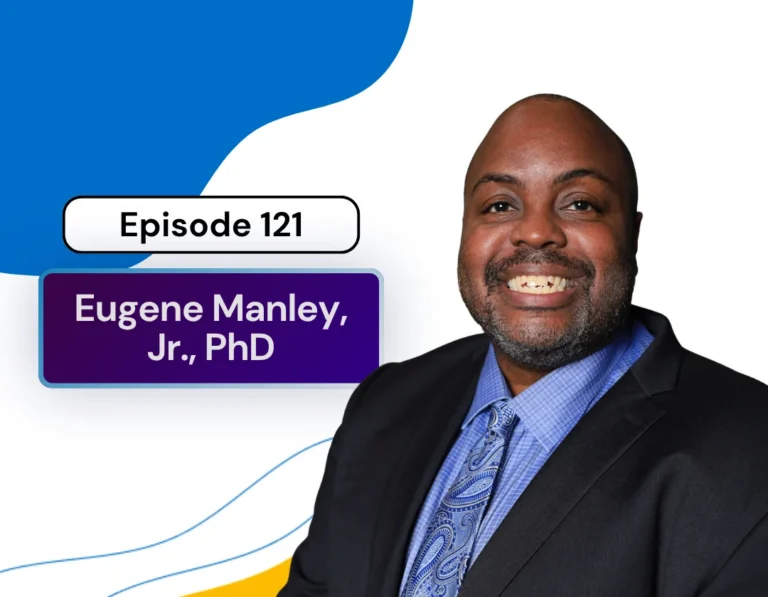
Dr. Eugene Manley Jr. is the Founder of the SCHEQ Foundation. He is an engineer, biologist, STEM advocate, and health equity champion. SCHEQ works to increase STEMM workforce diversity and to improve outcomes for underserved populations navigating the cancer care continuum.