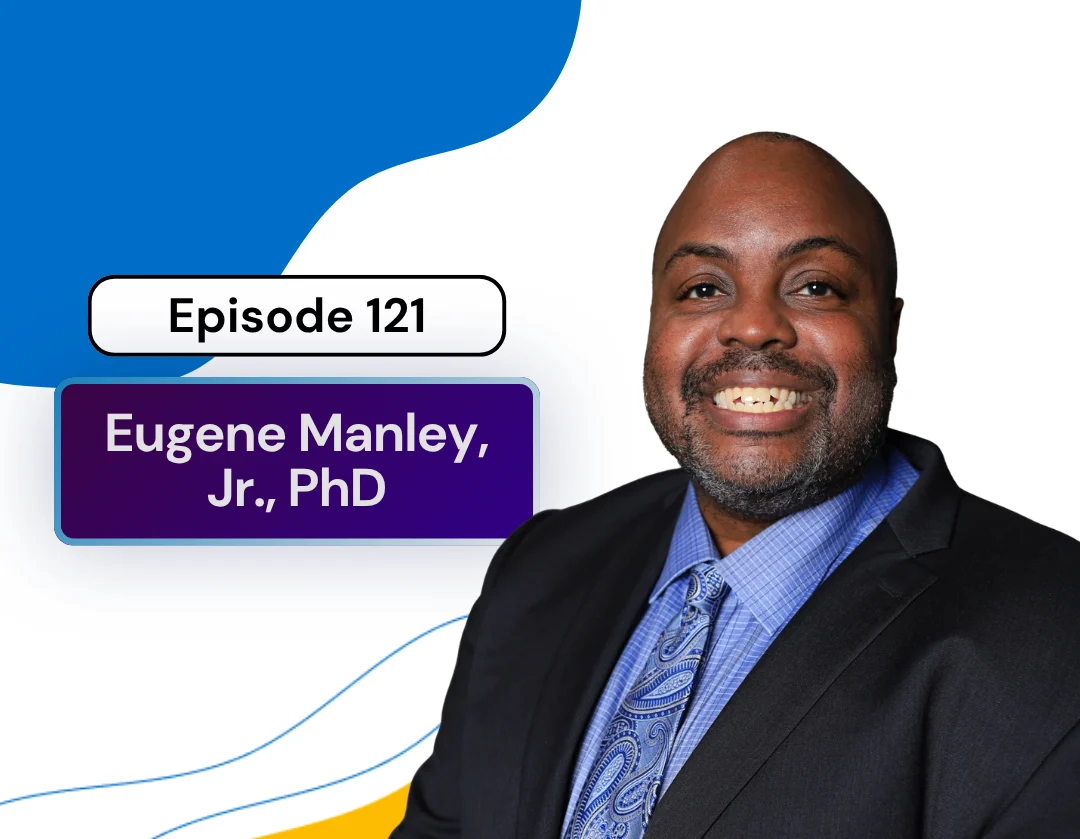
SCHEQ Founder & CEO Dr. Eugene Manley Jr., PhD was recently featured on the Manta Cares Patient From Hell Podcast, hosted by Samira Daswani.
The episode, titled “Health Equity in Cancer Starts in the Lab,” examines an often-overlooked reality in conversations about cancer disparities: inequity does not begin when a patient is asked to enroll in a clinical trial. It begins years earlier, with the biological samples, genomic databases, and funding priorities that determine which scientific questions are studied and how new treatments are developed.
During the conversation, Dr. Manley discussed research he co-authored in Frontiers in Oncology examining the racial and ethnic representation of lung cancer cell lines used in biomedical research. The publication identified more than 800 lung cancer cell lines available to researchers, including 390 derived from Asian patients and nearly 200 from White patients. Only 31, approximately 3%, were derived from Black patients, while none were identified from Hispanic/Latino, American Indian/Alaska Native, or Native Hawaiian/Pacific Islander patients. Additionally, there was a significant overrepresentation of male cells lines to female cell lines.
These disparities are important because cell lines are often the starting point for target identification and preclinical testing. If the materials used at the beginning of the research process do not adequately reflect the populations affected by a disease, inequities can become embedded long before clinical trial recruitment begins. Achieving health equity requires thinking about research, from the bench through treatment and survivorship.
The episode also discusses the realities patients face while navigating healthcare. Dr. Manley shares his own experience advocating for himself following reconstructive surgery while on Medicaid. That experience, and other family challenges, now informs how he helps patients understand how to navigate care, review their medical records, document concerns, and file complaints with the appropriate governing bodies.
What can patients do?
- reviewing medical records for accuracy
- having a proxy
- asking about biomarker testing and next-generation sequencing following a cancer diagnosis
- requesting access to patient or nurse navigation
- initiating conversations about clinical trials
The conversation reflects SCHEQ’s broader approach to cancer health equity: addressing disparities across the full continuum of research and care. Through its work in STEMM workforce development, cancer education, patient advocacy, screening, biomarker testing, and clinical trials, SCHEQ works to ensure that advances in cancer science reach the communities that have historically been left behind by both research and healthcare systems.
The question is not only who participates in a clinical trial. It is also whose biology was represented in the science that made the trial possible in the first place.
Watch the full episode:
https://www.youtube.com/watch?v=68vazEmsYgY
Learn more about the Patient From Hell Podcast and Manta Cares:
https://mantacares.com/pages/podcast
Learn more about SCHEQ:
https://scheq.org